
If you've ever stood over a half-packed suitcase at 11pm wondering how three pairs of shoes are supposed to fit, you're in the right place.
Most of us pack the way our parents did: clothes go in flat, things get squashed on top, and by the time you arrive your shirts look like they've been through a tumble dryer with a brick. There's a better way, and it involves one of the least exciting travel purchases you'll ever make – luggage cubes for packing.
This guide covers what to look for, how to use them, and the mistakes most people make, so you end up with a system instead of a suitcase full of regret.
How Packing Cubes Work
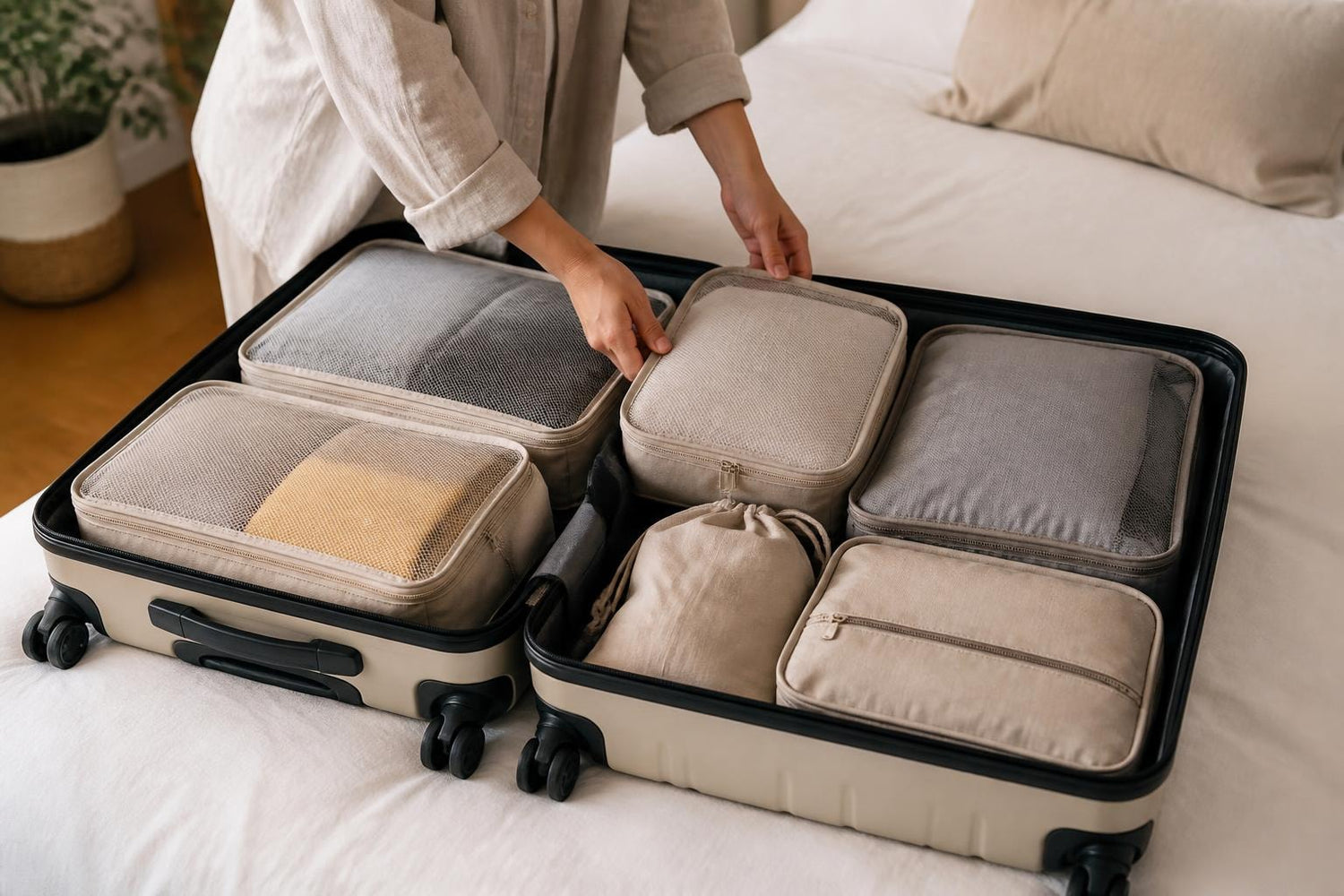
A packing cube is a soft pouch with a zip. You sort clothes into a few of them, drop them in your suitcase, and that's it. Where a normal suitcase gives you one big chaotic hole to dump things into, cubes give you four or five tidy compartments – shirts in one, underwear in another, gym kit in another.
It sounds too simple to matter, but it changes how you find things on a trip. Professional organisers recommend specific techniques for making the most of packing cubes, but the short version is this: sort by category, pack flat or rolled depending on the item, and don't overstuff.
What to Look For in a Set of Packing Cubes
Material Quality and Construction Standards
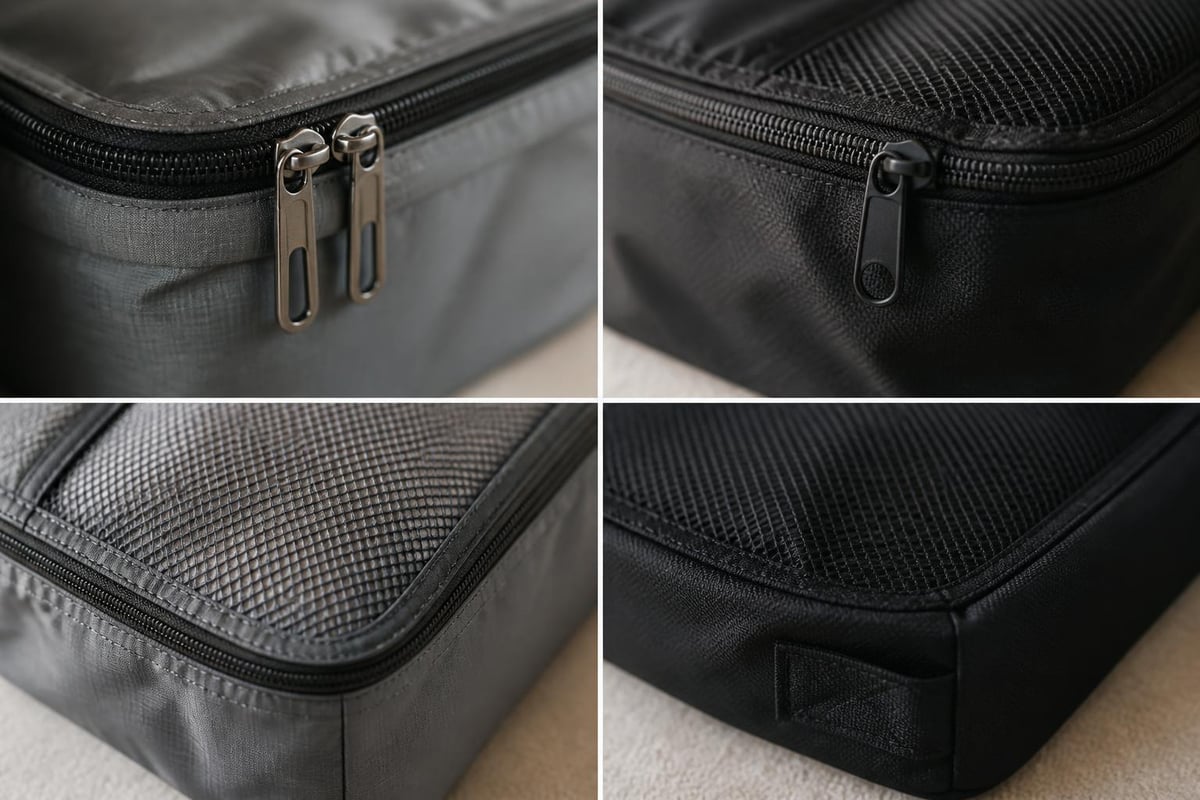
When selecting packing cubes, material composition directly impacts longevity and functionality. Cheap cubes tend to fall apart at the seams by the second trip, whereas premium options incorporate ripstop nylon or polyester fabrics that withstand frequent use.
Look for cubes that have features such as:
Ripstop nylon or thick polyester – lightweight, and they don't tear when you cram them full
A proper zip (YKK is the gold standard, but anything that doesn't feel flimsy will do)
Mesh on top so you can see what's inside without unzipping
A grab handle on one end so you can pull the cube out of a packed bag
Stitched corners – that's where the cheap ones blow out first
Maximising Space Through Strategic Cube Organisation
Buying cubes is the easy part. The bit that actually saves you space is how you fill them. People who pack well aren't doing anything clever... they've just stopped throwing clothes in at random and started thinking about it for thirty seconds before they zip up.
Picking the Right Sizes
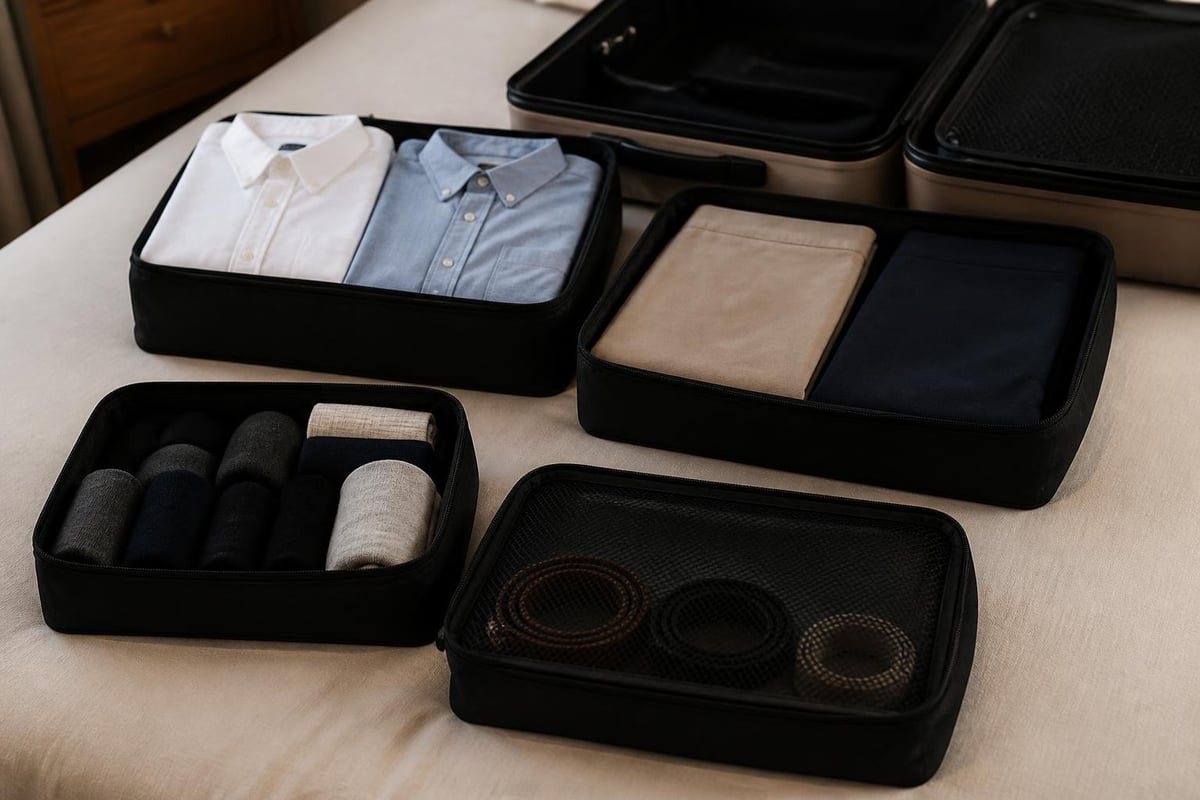
Most sets come with a mix of sizes, and each one has a job. Big cubes are for bulky stuff like jumpers and jackets. Mediums are the workhorses – shirts, trousers, dresses. Smalls hold socks, underwear, and the assorted bits that always go missing. The skinny ones nobody knows what to do with are perfect for ties, belts, and cables.
Cube Size |
Dimensions (Approx.) |
Best For |
Quantity Needed |
|---|---|---|---|
Large |
40 x 30 x 10 cm |
Bulky items, outerwear |
1-2 |
Medium |
35 x 25 x 10 cm |
Shirts, trousers, dresses |
2-3 |
Small |
25 x 18 x 10 cm |
Underwear, accessories |
2-3 |
Slim |
35 x 12 x 10 cm |
Ties, belts, cables |
1 |
A Bali weekend, a snow trip to NZ, and a buttoned-up work week in Singapore all need different mixes. Beach gear packs flat and light. A suit and three dress shirts wants a medium of its own. Adventure trips lean heavily on the bigger cubes. Mix and match based on what you're actually bringing, not what the set came with.
Advanced Packing Techniques and Methods
Once you've got the cubes sorted, how you fold matters more than people think. There are three main approaches, and the right one depends on what you're packing.
Rolling is the default for a reason. Roll a t-shirt tight and it takes up less room than a folded one, doesn't crease as badly, and slots into a cube like a sausage in a bun. It's the right move for casual clothes, gym gear, and anything jersey-knit.
Folding flat works better for stiff fabrics – chinos, button-down shirts, anything you want to look sharp at the other end. Stack them flat in a medium cube and they'll come out roughly the way they went in.
The bundle method is the one nobody bothers to learn, and it's the best for keeping dress shirts and suits wrinkle-free. You wrap each garment around a soft core (usually a small cube of socks and underwear), so nothing folds against a hard crease.
Condé Nast Traveler has a good walkthrough of different packing methods and extra tips.
The Compression Advantage
A compression cube has a second zip running around the outside. You pack it as normal, zip it shut, then zip the second one to squash everything down. The good ones shrink the contents by close to a third, which on a two-week trip is the difference between a carry-on and wrestling a checked bag at the airport.
Compression benefits include:
More clothes in a carry-on, which means no baggage carousel at either end
Clothes stay sorted even when squashed
Clothes don't shift around mid-flight, so they come out less crumpled
Easier to repack at the next hotel – squash, zip, done
If you want a set that handles all of the above without falling apart, our Compression Packing Cubes are loved by over 100,000 travellers and counting.
Different Ways to Sort Your Cubes
Most people sort by clothing type – shirts here, trousers there. That works fine, and it makes packing super easy - but it's not the only method for using luggage cubes.
The outfit method packs a full outfit into each cube – shirt, trousers, undies, socks – so you grab one cube each morning. Handy for a wedding weekend where you've already planned what to wear, less practical for trips where you want to mix and match.
The destination method gives each city its own cube. Useful if you're hopping through three places in a week, but it falls apart the moment your trip plan changes, and you usually end up with half-empty cubes.
Packing by Activity
If you're a very active traveller, you can split cubes by activity when your trip calls for it. Activewear in its own cube, work shirts in another, casual stuff in a third. The win here isn't really organisation. It's keeping sweaty gym gear and damp swimmers away from your clean clothes without needing a separate laundry bag.
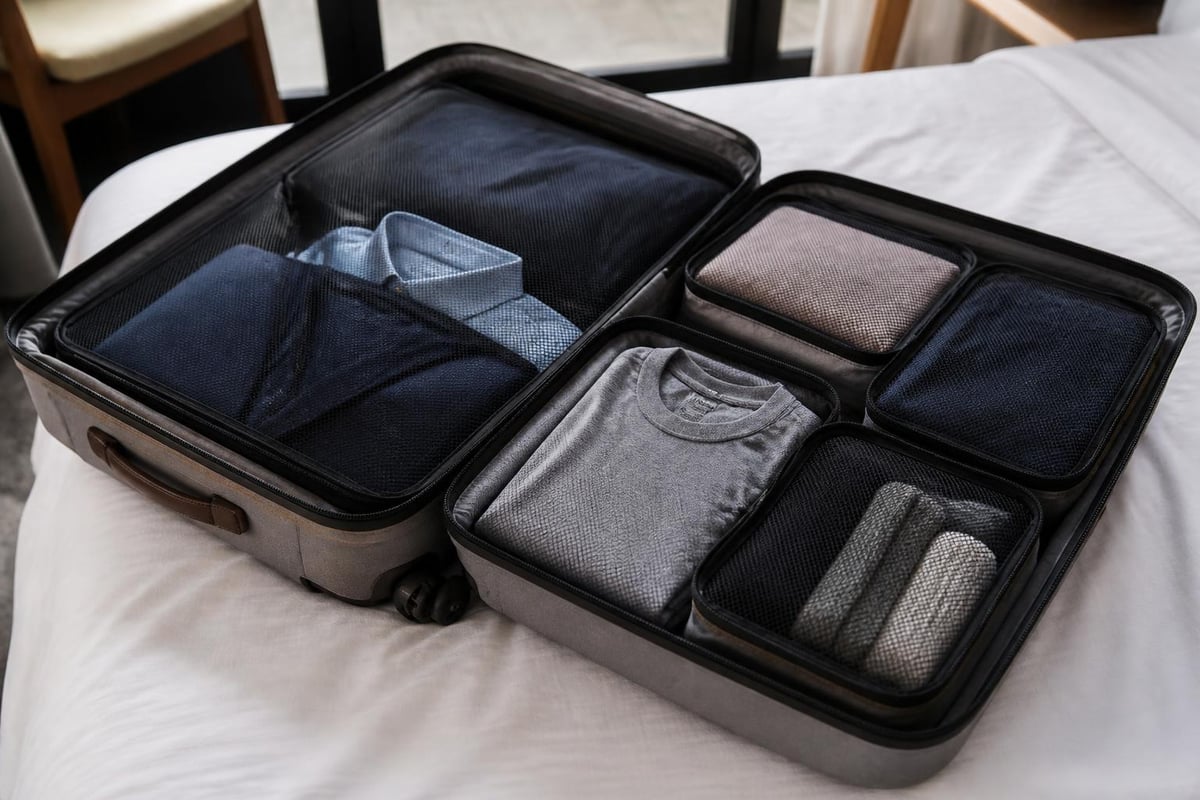
Activity Type |
Cube Allocation |
Essential Items |
|---|---|---|
Business |
2 medium cubes |
Suits, shirts, accessories |
Casual |
1 large, 1 medium |
Jeans, t-shirts, jumpers |
Athletic |
1 medium cube |
Activewear, trainers |
Evening |
1 small cube |
Dress clothes, jewellery |
If you're sold on the idea, our packing cube range has sets in different sizes and combinations, so you can pick one that suits the way you pack.
Maintaining Organisation Throughout Your Journey
Packing well at home is one thing. Staying organised after a week on the road is another. Cubes only help if you keep them sorted, otherwise by day four your suitcase looks the same as everyone else's.
A smart tip is to take a second set of laundry cubes so you don't end up with a bulky plastic bag full of dirty laundry. That way clean stays clean, dirty stays dirty, and you never pull a worn shirt out thinking it's fresh.
Living Out of Your Cubes at the Hotel
Most people don't bother unpacking. They leave the cubes in the suitcase and use them like drawers. Open the lid, grab what you need, close it again. Works fine for two- or three-night stays.
For longer stops, pull the cubes out and drop them straight into the hotel drawers. You get the unpacked feeling without folding everything into stacks. When it's time to check out, they go back in the suitcase as-is.
A few small habits that help:
Leaving cubes in suitcase for brief stays
Transferring cubes to drawers for extended visits
Using cube tops as visual inventory checklists
Designating specific cubes for daily use items
Maintaining one cube for immediate access essentials
Are Luggage Cubes Just For Travel?
Cubes aren't just a travel thing. Once you've got a set, you'll find yourself using them around the house, which makes them feel less like a one-holiday purchase. Living Etc has a good piece on home uses, but a few obvious ones:
Off-season clothes. Pack winter jumpers into a compression cube in summer and shove it on top of the wardrobe. They come out crease-free and you've freed up a drawer.
Gym and kid kits. Throw a small cube into a backpack with a change of clothes, headphones, and a deodorant — grab and go. Same trick works for swimmers, footy gear, or dance bags.
Drawer chaos. Cubes double as drawer dividers if your sock drawer has descended into a tangled mess. Same goes for craft supplies, cables, or anything else that vanishes the second it goes into a drawer.
If you want a set that handles both the suitcase and the house, our travel accessories are built to last well past a single trip.
Common Packing Mistakes and Solutions
Even experienced travellers fall victim to common packing errors that reduce cube effectiveness. Overstuffing cubes beyond capacity creates bulging that negates space-saving benefits whilst stressing zippers and seams.
Optimise Compression Through Restraint
Successful cube packing requires leaving slight compression room within each container. Filling cubes to approximately eighty percent capacity allows proper closure whilst maintaining structural integrity. The cube fits better in your suitcase, the zip closes without a fight, and you've got give for the inevitable extra t-shirt you buy on holiday.
Avoidable mistakes include:
Mixing clean and dirty clothes in the same cube
Sorting cubes in a way that doesn't match how you grab clothes out of the bag
Skipping compression on bulky items like jumpers and jackets, which is the one place it really pays off
Loading all the heavy cubes on one side, so the suitcase tips over when you stand it up
Trying to do a two-week trip with three small cubes – you'll just end up cramming
Weight and Balance Inside the Suitcase
Where the cubes sit inside the bag matters more than people realise. Heavy ones go at the bottom, near the wheels. Lighter stuff sits on top. Pack it the other way and the suitcase wobbles when you stand it up, and turns into a back-pain delivery system when you pick it up.
The other reason to think about weight is the airline. Once your stuff is sorted into cubes, you can pick each one up and roughly gauge its weight in your hand. An affordable luggage scale makes it exact. If the bag's over the limit, swap a heavy cube into your carry-on instead of frantically repacking on the floor at check-in.
Dealing With Different Airlines
Aussie travellers know the pain: Jetstar gives you 7kg carry-on, Qantas is the same, Singapore Airlines is more generous on long-haul, and some budget carriers in Europe are stricter still. Cubes make the shuffle painless – pull one out of the suitcase, drop it into the carry-on, done. Five seconds, not five minutes hunched over your bag at the gate.
We have a growing selection of travel bags designed specifically for cube compatibility, without weird gaps or wasted space.
Looking After Your Cubes
A decent set will last years if you don't abuse them. The jobs are simple.
Wash them when they start smelling like the trip. Most cubes survive a gentle machine wash with a regular load, but if you're precious about them, a quick hand wash in the sink does the job. Skip the dryer – the heat wrecks the mesh and any waterproof coating on the base. Hang them up instead.
Between trips, store them flat or loosely folded. Shove them into a tight ball at the back of a cupboard and they'll come out shaped that way next time.
The zip is the bit that fails first. Don't yank on it when the cube's overstuffed (see: the 80% rule), and if it starts catching, a tiny dab of beeswax or a graphite pencil rubbed along the teeth will sort it.
Maintenance Task |
Frequency |
Method |
|---|---|---|
Light cleaning |
After each trip |
Wipe with damp cloth |
Deep cleaning |
Every 5-6 trips |
Hand wash, air dry |
Zipper maintenance |
Monthly (if in use) |
Lubricate with wax/graphite |
Storage inspection |
Before each trip |
Check for damage, wear |
Packing Cubes as Part of a Full Travel Kit
Luggage cubes work best when they're part of a wider setup – a matching suitcase, a decent toiletry bag, maybe a separate tech pouch. You don't need it all on day one, but each piece makes the next one work harder.
Colour coding is the underrated trick. On family trips, give each kid (or partner) their own colour so you're not opening five cubes to find someone's pyjamas. Solo travellers can do the same by category — black for tops, grey for trousers, blue for everything else. You spot what you need without reading labels.
Buying a bundle usually works out cheaper than piecing it together, and the bits actually fit each other.
Sustainable Travel and Environmental Considerations
There's a small but real environmental angle here. Cubes make it easier to travel carry-on, which means less weight per passenger and lower fuel burn at scale. They cut down on plastic bag use at the hotel too. A dirty-laundry cube does the job a bin liner usually would. And the better the cube, the longer it lasts before ending up in landfill.
If it matters to you, look for cubes made from recycled polyester or nylon – most decent brands have a line of them now. The bigger win, though, is just buying a set that lasts a decade instead of two that last five years each. Cheaper for you, fewer cubes in the bin.
Related Packing Guides
Packing cubes are one piece of the puzzle. To go deeper, see:
- Compression Packing Cubes: What They Are & How to Use Them — how the dual-zip system works and when to use it.
- Compression Bags for Travel — roll-up and vacuum bags for maximum space saving.
- Are Packing Cubes Worth It? — an honest look at who benefits.
- Do Packing Cubes Save Space? — what actually compresses, and by how much.
Packing cubes won't turn a bad trip into a good one, but they'll save you from a chunk of the small annoyances travel piles up – the wrinkled shirts, the lost socks, the suitcase that takes an hour to repack. Sort by category, don't overstuff, keep a laundry cube going, and the system pretty much runs itself. When you're ready to give them a try, Simplify Living offers fast and free shipping plus backs all our luggage cubes with a 2-year warranty.

Leave a comment
This site is protected by hCaptcha and the hCaptcha Privacy Policy and Terms of Service apply.